If you moved here with a degree, years of experience and a strong track record, why does the job market sometimes treat you like you’re starting from nothing?
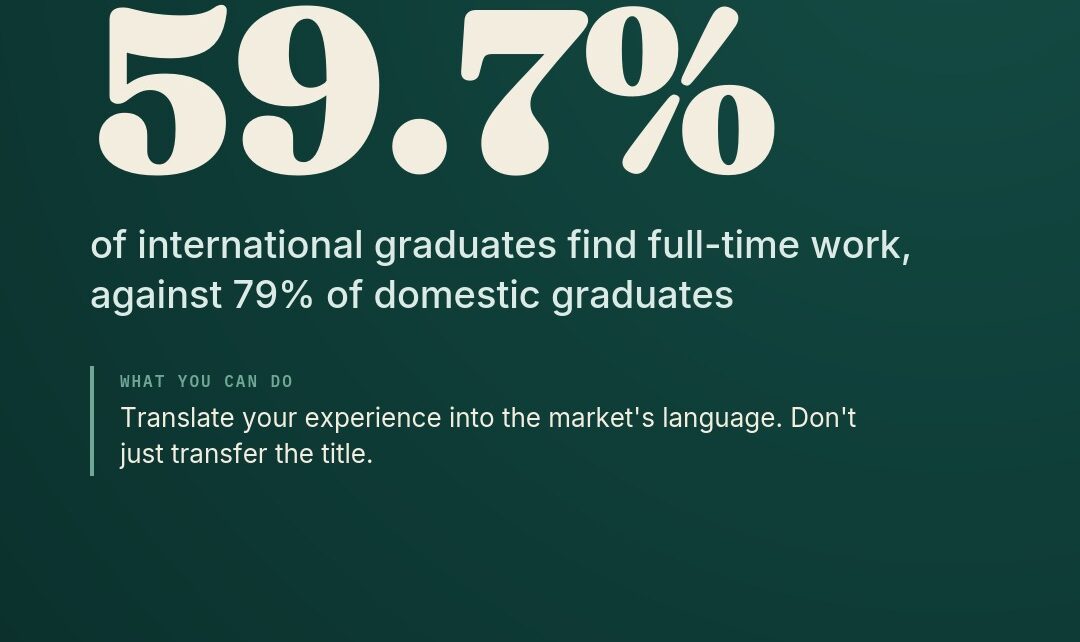
International graduate full-time employment sits at 59.7%, against 79% for domestic graduates, with more than half of international graduates working below their qualification level. Source: QILT Graduate Outcomes Survey, via Student Mindsets, Aspirations & Expectations in Australia (2026)
The reasons cited most often are limited local work experience, difficulty getting overseas experience recognised, and recruitment bias, not a shortage of ability. It’s compounded by a wider mood:
79% of young Australians expect a worse long-term financial trajectory than their parents had. Source: Australian Youth Under Pressure (2026)
This is where professional identity becomes as important as the qualification itself. Your CV, your LinkedIn profile and your interview answers all need to translate your experience into a language the Australian market recognises quickly.
1. Translate, don’t just transfer. A senior title from another country doesn’t always land the same way here. Describe the scope, the outcomes and the numbers, not just the label.
2. Build local proof, deliberately. A short course, a volunteer project, a professional association membership. Each one signals that you understand the local context, not just the global one.
3. Lead with your differentiator. Bilingual fluency, cross-market experience and, increasingly, AI fluency are genuine advantages.
Graduates who demonstrate AI fluency are hired roughly 30% faster, yet 88% of hiring managers say they can’t find candidates who have it. Source: LinkedIn Jobs on the Rise 2026, via Student Mindsets, Aspirations & Expectations in Australia (2026)
Underemployment is rarely about capability. It’s usually about translation. Once employers can see the value clearly, the story changes fast.
This is precisely the gap Empowering Employability was built to close. Three courses, each targeting a different part of that translation:
- Course 1 — Foundations of Australian Professional Life
- Course 2 — Building Your Professional Brand and Career in Australia
- Course 3 — Key Strategies for Migrant Professionals
If you’ve had to reintroduce your career here, what finally made employers take notice?