Heads of Global Capability Centers are often recognised for operational excellence, scale and efficiency. Yet behind every successful centre is a leadership philosophy that determines whether it remains a delivery organisation or evolves into a trusted strategic partner.
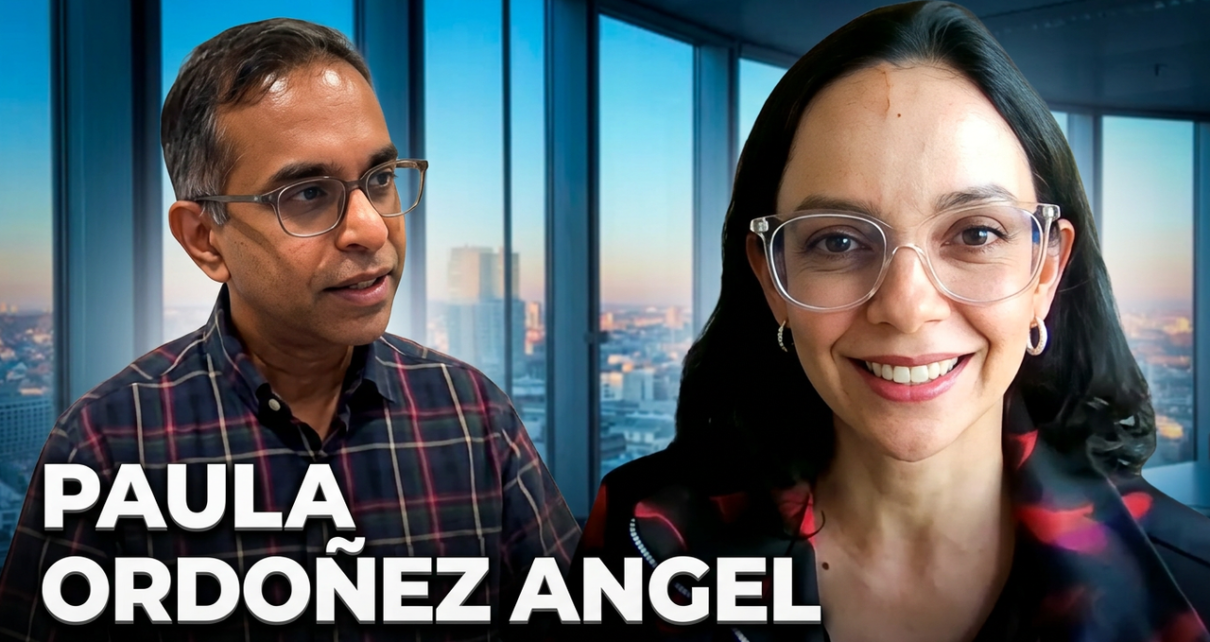
In this edition of GCC Voices, I spoke with Paula Ordoñez Angel, former Americas GBS Site Director and Country General Manager at Zimmer Biomet, about scaling one of Latin America’s most respected Global Business Services organisations. During her leadership, the Colombia GBS expanded from an initial plan of 200 to 300 professionals into an organisation of around 600 employees supporting finance, HR, supply chain, engineering, IT and commercial operations across the Americas.
Rather than attributing that growth to aggressive migration plans, Paula believes it resulted from something far more valuable: organisational trust.
Watch the interview on YouTube: https://youtu.be/lPuYGjrgYqc
Growth begins when capability creates demand
One of the most revealing insights from our discussion was that transformational growth rarely follows a predefined roadmap forever.
Paula explained that the turning point wasn’t marked by a single meeting or executive decision. Instead, she noticed that conversations with business leaders began changing.
Initially, discussions centred on scheduled transitions and predefined migration plans. Over time, however, leaders began asking a different question:
“Can Colombia take on this capability?”
That subtle shift represented something much larger.
Instead of following an established migration programme, the business was actively seeking opportunities because it trusted the centre’s capability.
As Paula reflected:
“We were really growing because there was additional investment in our GBS sites because of the capabilities that we were able to grow.”
That confidence opened the door to functions far beyond the original scope, including engineering, medical affairs, manufacturing support and CAD design. The centre was no longer viewed as an execution arm but as a trusted enterprise capability.
Trust is earned before transformation succeeds
Many organisations speak about trust as a leadership value. Paula views it as an operational discipline.
Sharing the example of transitioning indirect tax processes, she described how local teams understandably questioned whether a newly established GBS could match years of local expertise.
Rather than attempting to persuade stakeholders with presentations or business cases, her team focused on partnership.
They involved local experts throughout the transition, documented knowledge carefully, established governance, agreed service levels and measured performance transparently.
Only after consistently delivering quality improvements, stronger controls and measurable business outcomes did confidence grow.
As Paula noted, trust is not created on the day of go-live.
It develops through repeated delivery, openness and credibility.
Co-design replaces handover
Perhaps the strongest leadership lesson came from Paula’s approach to transitions.
Instead of treating migration as transferring ownership from one team to another, she described it as co-designing long-term success.
Using the example of managing Brazil’s complex indirect tax processes, Paula explained that the conversation was never about convincing local teams they could do better.
Instead, the dialogue focused on understanding risks together.
Her team invested time travelling to local markets, walking through day-to-day operations, understanding exceptions and jointly testing controls before taking ownership.
Importantly, the local experts remained partners well beyond go-live.
That collaborative mindset reduced organisational resistance while improving operational resilience.
Five leadership lessons
Our conversation reinforced several principles that extend well beyond GCCs.
- Capability creates demand more effectively than migration plans.
- Trust is earned through consistent delivery, not presentations.
- Credibility grows from measurable performance.
- Co-design builds stronger transitions than handovers.
- Strategic partnerships outlast implementation milestones.
Final thoughts
As Global Capability Centres continue evolving into enterprise transformation hubs, technical capability alone will not determine success.
Leaders who invest in credibility, partnership and trust create organisations that attract new opportunities naturally.
Paula’s experience demonstrates that the most successful GCCs don’t simply execute work more efficiently.
They become organisations the business actively seeks out for its next strategic challenge.
About Paula Ordoñez Angel
Paula Ordoñez Angel is the former Americas GBS Site Director and Country General Manager at Zimmer Biomet. She has more than twenty years of experience in finance, treasury and Global Business Services across healthcare and FMCG, leading large-scale transformation and capability development programmes throughout the Americas.
About GCC Voices
GCC Voices is an interview series hosted by Dr Aniisu K. Verghese, featuring conversations with Global Capability Centre leaders, site directors and transformation executives on leadership, communication, change and the future of enterprise capability.
