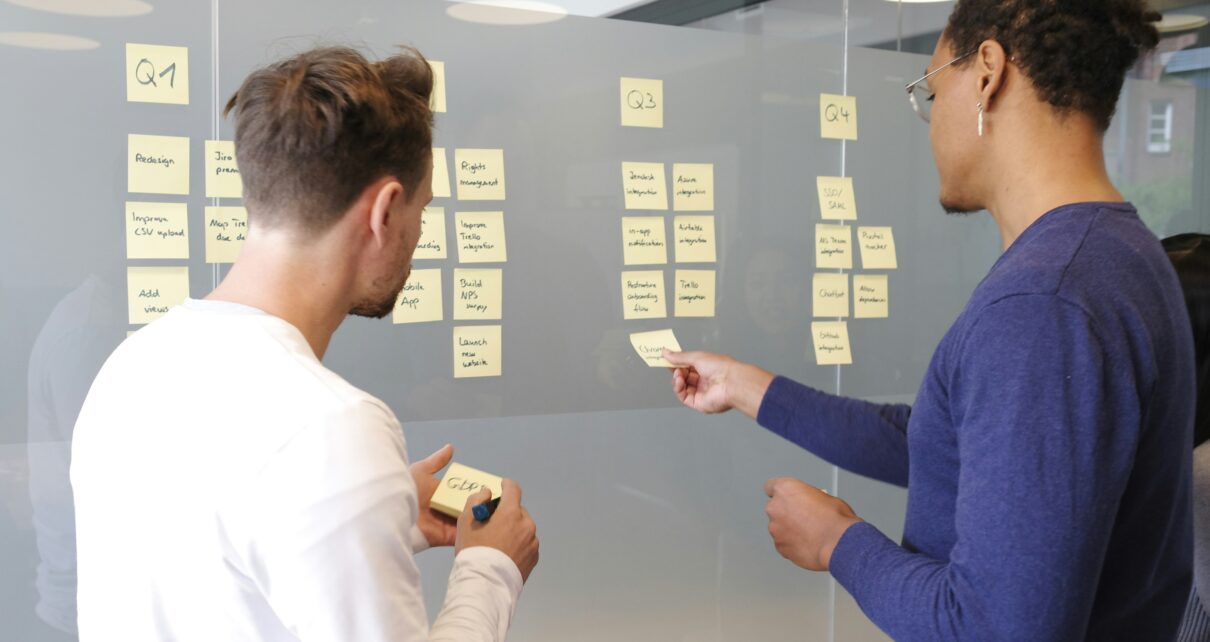
WEEK 1: The Recognition – Staff as Partners
Monday
The fatal flaw in your internal communications
You crafted the perfect message. Clear, compelling, concise.
You hit send to 5,000 employees.
But here’s the problem: You never asked them what they needed to know, how they wanted to receive it, or if they even cared.
The flaw? Treating staff as an audience instead of partners.
This week, we challenge everything you thought you knew about internal communications.
Tuesday
The audience mindset vs. the partner mindset
Audience approach:
- We tell, they listen
- We decide, they follow
- We create, they consume
Partner approach:
- We co-create together
- We invite their input
- We value their expertise
Reflection: Review your last 5 communications. Did you involve staff in creating them? Or just broadcasting to them?
Wednesday
Why we got it wrong
Traditional IC assumes:
- Leaders know best
- Staff need to be “informed”
- Communication flows top-down
- Control equals effectiveness
Reality check: Your employees have insights, ideas, and intelligence that could transform your communications—if you’d only ask.
Question: What are you afraid will happen if you let go of control?
Thursday
The trust deficit
Organizations don’t listen to staff enough, don’t invite their views in planning communications, and don’t trust them to partner on decision-making Commsnews.
The result?
- Disengaged employees
- Communications that miss the mark
- Initiatives that fail
Practice: Identify one communication decision this week where you could invite staff input.
Friday
What “inclusive” really means
Forget what you think you know about inclusion.
Inclusive Internal Communications emphasizes involving staff, partnering with employees, and crowdsourcing solutions for communication and business effectiveness
It’s not about:
- Accessible fonts
- Diversity images
- Translation services
It’s about:
- Giving staff a voice
- Sharing decision-making power
- Co-creating solutions
Saturday
The business case for partnership
When staff are partners:
- Communications land better (they helped create them)
- Buy-in increases (they’re invested)
- Innovation emerges (diverse perspectives)
- Trust builds (they feel valued)
Your role shifts from broadcaster to facilitator.
Sunday
Week 1 Challenge: The Partnership Audit
Answer honestly:
- In the past month, how many times did you ask staff for input BEFORE creating communication?
- How many employees contributed ideas to your communications strategy?
- Do you have a mechanism for staff to test communications before launch?
- When was the last time you implemented an employee’s communication suggestion?
Score yourself:
- 0-2 instances: You’re operating in broadcast mode
- 3-5 instances: You’re starting to shift
- 6+ instances: You’re building partnership
Commitment: Choose ONE way you’ll involve staff this week.
Share your thoughts on inclusive internal communications here. What steps will you take to build a culture of inclusive internal communication at your workplace?